Can You Patent a Business Model? In some places, it’s debated & depends on the law, and I tried to give info.
Patenting business models has sparked controversy and different viewpoints. Some argue they are abstract concepts, unfit for patent protection.
They fear patenting business plans could stifle innovation, hamper competition. Conversely, others contend certain business models, if novel, non-obvious, offering technical solutions, should receive patent safeguards.
In truth, the answer on whether you can patent a business model lacks straightforward clarity. It can hinge on jurisdiction, specific eligibility criteria.
Our deep-dive aims to dispel myths, offering insights to protect unique strategies, and stay ahead. We endeavor to shatter assumptions that business models can’t be patented, guiding you on safeguarding intellectual property.
So, let’s cut to the chase.
Article Breakdown
Defining a Business Model
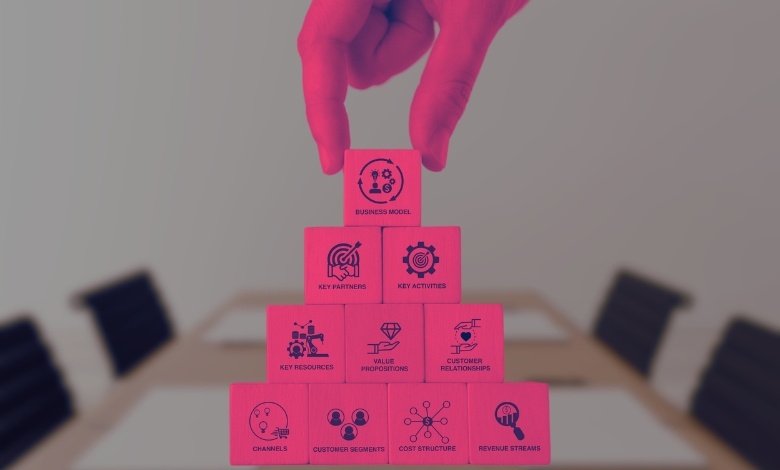
A business model outlines a company’s framework for creating, delivering, and capturing value. It forms a startup’s core identity, encompassing revenue streams, customer relations. Essentially, it’s your monetization plan, your competitive edge.
Business models seem like broad concepts, but they have value as intellectual property. Like inventions, well-crafted models are unique, worthy of protection. Can you patent a business model? Yes and no. Here’s why:
Patenting Business Models
In short, the answer is yes and no. Confused yet? Let’s break it down.
The United States Patent and Trademark Office grants property rights to inventors for inventions. These give owners 20-year exclusive control. Not all inventions qualify though. Inventions must be novel, useful, and non-obvious.
Business models face controversy, as they’re abstract concepts, not tangible inventions. Unlike products or processes, models may not meet utility patent criteria under current laws. Guidelines determine what can and can’t be patented.
Alternative Protections
If your model doesn’t fit patent requirements, don’t fret. Other options protect intellectual property. These can work better for startups and entrepreneurs.
Distinguishing Your Brand with Trademarks
Logos, names, and catchphrases are shielded by trademark law. They set your brand apart, like Apple’s iconic logo – straightforward yet mighty. A robust brand is invaluable, guarding against imitators.
Confidential Data: Trade Secrets’ Stronghold
For startups, maintaining trade secrecy often reigns supreme. Keeping business strategies and inventions under wraps offers endless security, if confidentiality prevails. Particularly handy when operational tactics or algorithms evade reverse engineering.
Copyright Safeguards Original Expression
While ideas aren’t copyrightable, their expression finds sanctuary. If your model involves unique writing (software code, e-books), copyright could be key. It also shields creative works like graphics, videos, and audio recordings.
Flourishing Without Patents: Small Businesses’ Triumph Tales
As patent debates rage, many small firms have prospered sans patents. They focus on delivering unique value, cultivating customer bonds, and innovating products/services constantly.
Airbnb’s Soaring Success
Airbnb epitomizes a small business thriving without patenting its model. They connected homeowners and renters on a platform transforming hospitality. Prioritizing user-friendliness, fostering community trust, and implementing feedback catalyzed Airbnb’s ascent as a sharing economy titan – all without relying on business model patents.
Uber
Uber experienced success without legal protection for their business approach. The company leveraged technology and crowdsourced labor to innovate traditional taxi operations. Prioritizing convenient, cost-efficient transportation through a user-friendly app and quality control via ratings enabled Uber’s rapid growth and market dominance in the ride-hailing sector. Patents weren’t necessary for their model’s prosperity.
Dropbox
Dropbox is a prime illustration of a small enterprise thriving sans patented business tactics. Addressing a widespread need for effortless file storage and sharing, they introduced a straightforward, cloud-based solution. This user-centric approach, not patent safeguards, fueled Dropbox’s rise to tech industry prominence. Continuous product refinement based on customer input sustained their success.
The Unyielding Power of Innovation
However, intellectual property rights aren’t the be-all and end-all. A startup’s most formidable asset lies in relentless innovation and adaptability. In today’s ever-evolving business landscape, complacency inevitably leads to obsolescence. While patents offer a safety net, the ability to continuously improve and reshape one ‘s model is paramount. By staying ahead of the curve, companies can maintain a competitive edge and create sustained value.
Remaining Competitive Sans Patents
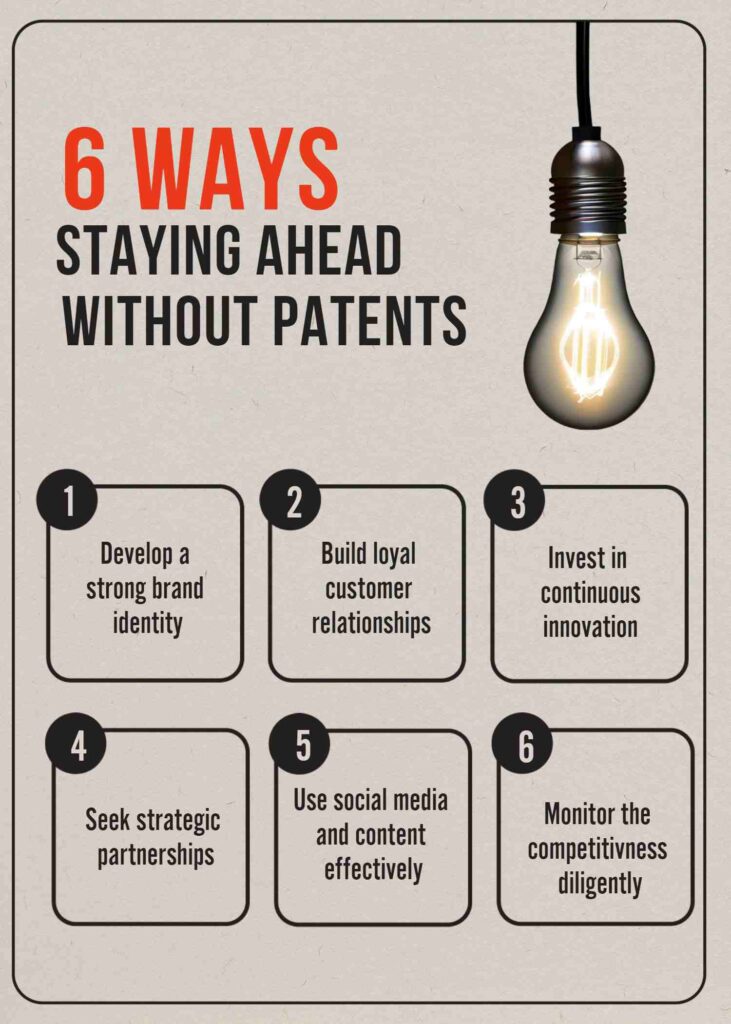
- Building a powerful brand identity stands crucial to differentiating your startup in the market without patents. Concentrate on what makes your company unique and effectively communicate that to your audience.
- Cultivate and nurture customer relationships diligently. Engaged customers tend to remain loyal and promote your brand, providing an edge competitors find challenging to replicate.
- Invest resources in continuous innovation and improvement persistently. The business landscape evolves dynamically, and by continually enhancing your products, services, or operations, you can stay ahead of trends and competitors.
- Leverage partnerships and collaborations strategically. Joining forces with complementary businesses can extend your reach while offering novel value to your customers.
- Harness social media and content marketing astutely to create value. Informative and engaging content attracts and retains a dedicated following, establishing authority within your niche.
- Monitor the competitive landscape vigilantly. Understanding competitors’ actions enables early identification of opportunities and threats, facilitating strategic adjustments proactively.
Concluding Perspectives
In essence, while securing patents for business ideas can prove challenging, it’s undoubtedly achievable. Startups possess multiple avenues to safeguard their unique ideas, and by remaining innovative and proactive, they can maintain their businesses’ security and competitiveness. The discourse surrounding protecting a business’s unique concepts persists as an ongoing and vital topic within the entrepreneurship community. Sharing experiences and advice concerning patents and intellectual property facilitates collective growth. A startup’s success hinges on its ability to innovate, adapt, and secure its market position, irrespective of any patent-related obstacles it may encounter.
FAQs
Can I patent my unique business model?
Obtaining patent protection for a novel business model tends to be intricate. Business models are commonly deemed non-patentable subject matter, viewed as abstract principles. Besides, patenting a business model can be an expensive, prolonged process. The eligibility for patent protection may fluctuate based on jurisdiction and patent office prerequisites.
What are the requirements for patenting a business model?
To patent a business model, it must fulfill particular conditions. These necessities differ based on jurisdiction and patent office requisites. Typically, a business model must be novel, non-obvious, and possess practical application to qualify for a patent.
Will patenting my business model prevent others from conducting academic research on the same subject matter?
No, patenting a business model does not impede others from pursuing academic research on that subject matter. Patent protection does not restrict academic research.
Are there any other reasons to consider patenting a business model?
Yes, patenting a business model offers additional advantages:
- It safeguards your unique competitive edge in the market.
- It prevents competitors from copying or imitating your business model.
- Gaining investors or buyers’ interest involves showcasing your business model’s uniqueness and worth.
- Other revenue sources could come from licenses or partnerships – a potential plus.