
The startup world has built an elaborate mythology around success and an almost total silence around everything else. That silence is costing us.
Spend enough time around the startup ecosystem, and you begin to notice what is conspicuously absent from the conversation. The keynote speakers talk about their exits. The panel discussions relitigate their pivots as though they were all along part of the plan. The case studies in business school curricula are almost exclusively written backwards from success, which gives them the narrative tidiness of a fable and roughly the same relationship to reality.
What you rarely hear about, in public, on record, in a format that might actually help someone navigating the same terrain, is the period before things worked. The clients who churned. The co-founder who left badly. The funding round that did not close. The months where the only honest answer to ‘how’s it going?’ would have been too long and too raw to give at a networking event. This is not a small omission. It is the central experience of building a company, and the ecosystem has collectively agreed to treat it as an embarrassing footnote.
The Cost of the Highlight Reel
The consequences are not abstract. First-time founders, lacking honest maps of the terrain, routinely misread their own situations, mistaking a normal rough patch for evidence of fundamental failure, or a moment of apparent momentum for proof that the hard part is over. Both mistakes are expensive. The former leads to premature capitulation; the latter to overconfidence at exactly the moment when rigour matters most.
There is also a loneliness that accumulates. Building a company is structurally isolating, the founder is almost by definition operating with more uncertainty than anyone around them, and with fewer people to whom they can be fully honest. Investors want confidence. Employees want stability. Friends and family want reassurance. The space to say ‘I genuinely do not know if this is going to work’ is vanishingly small, and its absence has a cost that the ecosystem does not like to measure.
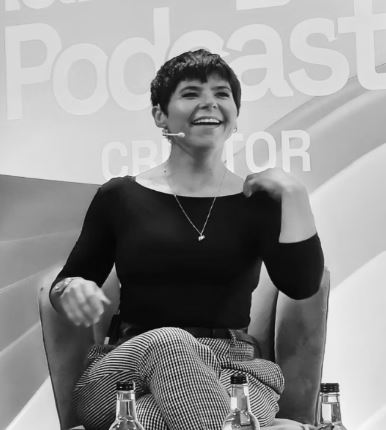
Stephanie Melodia has been building a space for exactly that conversation. The London entrepreneur, founder and ex-CEO of Bloom, a marketing agency for early and growth-stage startups, and host of the Strategy & Tragedy podcast, has made the less-told side of business-building central to her public work. The podcast title is not accidental. Strategy and tragedy are not opposites in the startup world; they are, more often than not, the same story told from different distances. Melodia, who advises MBA students through Oneday and has spoken at Web Summit, Elite Business Live, and TechBBQ, was also named among the UK’s top influential female founders by Startups Magazine and has been featured in Forbes.
What Honest Mentorship Actually Looks Like
The antidote is not more vulnerability content; the ecosystem already has an abundance of performative candour, founders narrating their struggles in the past tense from the comfortable vantage point of having already succeeded. What is rarer, and more valuable, is real-time honesty from practitioners who are willing to be uncertain in public, to say that something did not work before they know what will, and to engage with failure as data rather than drama.
Melodia’s ‘Hacking Luck’ framework, developed from her observation of a hundred startups through The Bloom 100 review, is instructive here. The framework does not promise a formula for success. It examines the conditions, the decisions, the habits, the relationships, and the tolerance for ambiguity that make founders more resilient when things go wrong and more perceptive when opportunities appear. That is a fundamentally different offer from the typical conference keynote. It assumes difficulty rather than routing around it.
The startup ecosystem will not fix its silence problem overnight. But the founders who are building the most interesting companies right now tend to share a particular quality: they are not pretending. They know what they do not know. They talk about it. And they have found, or built, the spaces where that kind of honesty is not just permitted but expected. That is not a soft skill. In the current climate, it might be the most important one.