
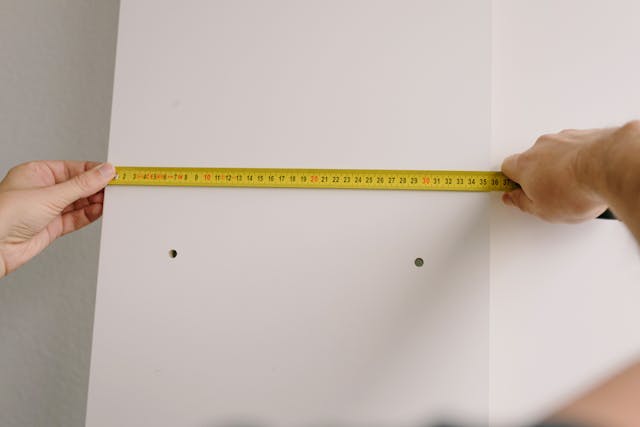
Learn how to find linear feet step by step for flooring, fencing, and DIY projects, simple math anyone can follow.
How to find linear feet: measure the length of an item in feet from end to end. Linear feet measure length only, not width or area. If multiple pieces exist, add their lengths together.
I still remember standing in a hardware store aisle, staring at trim pieces like they were written in a language I should understand but didn’t. The label said “$1.79 per linear foot.”
Per what foot? My foot? The board’s foot? Some imaginary carpenter’s foot?
I nodded like I understood. I absolutely did not.
That small confusion turned into a mini-quest. I googled, measured wrong, re-measured, and eventually realized something comforting: linear feet aren’t complicated, just unfamiliar.
And most of us only meet them when money is on the line. Flooring. Fences. Lumber. Molding. Suddenly every inch matters.
If you’ve ever paused mid-project wondering what linear feet actually mean, this guide is for you. I’ll walk through it the way I wish someone had shown me, step by step, with real examples, small mistakes, and the clarity that comes after.
Article Breakdown
What Does Linear Feet Mean?
Linear feet measure length in a straight line
A linear foot is simply 12 inches of length.
That’s it.
No width. No height. No area.
Just length.
Think of it like measuring a rope. You don’t care how thick the rope is, only how long it stretches.
Quotable fact: A linear foot always equals 12 inches, no matter the material.
That means a 10-foot board is 10 linear feet long. A 6-foot fence panel is 6 linear feet. A 50-foot roll of cable is 50 linear feet.
Simple once you see it. Confusing until then.
Why Not Just Say “Feet”?
Good question.
Because in construction and home improvement, “feet” can mean square feet or cubic feet, which measure area and volume.
Linear feet remove the guesswork. They say: “We only care about length here.”
It’s precision language. And precision saves money.
When You Actually Need to Know Linear Feet
Linear feet sneak into more projects than you’d expect.
Common situations
1. Flooring trim and baseboards
You measure the perimeter of a room to know how much trim to buy.
2. Fencing
Fence companies often price by linear foot.
3. Lumber purchases
Boards are sold by length.
4. Shelving and countertops
You pay based on how much length you need.
5. Wiring and piping
Electricians and plumbers calculate runs in linear feet.
Fact: Contractors often estimate materials in linear feet before converting to cost.
At first, I thought linear feet were some advanced builder concept. Turns out, it’s just everyday measuring with a formal name.
How to Find Linear Feet (Step-by-Step)
Let’s break it into calm, doable steps.
Step 1: Measure the Length
Use a tape measure. Measure from one end to the other.
Record the length in feet. If it’s in inches, divide by 12.
Example: 120 inches ÷ 12 = 10 linear feet.
Done.
Step 2: Add Multiple Lengths Together
If your project has several pieces, add them.
Example: Wall 1 = 10 ft Wall 2 = 12 ft Wall 3 = 10 ft Wall 4 = 12 ft
Total = 44 linear feet
That’s how much baseboard you need.
Step 3: Account for Waste
This is where real life enters.
Corners. Mistakes. Crooked cuts.
Add 10–15% extra.
If you need 44 feet, buy about 50.
Because running short mid-project feels worse than buying a little extra.
Linear Feet vs Square Feet (The Big Confusion)
This is where many people trip up.
Linear Feet = length only
Square Feet = length × width
Example:
A board that is: 10 feet long 1 foot wide
Linear feet = 10 Square feet = 10
But if the board is 10 feet long and 2 feet wide:
Linear feet = 10 Square feet = 20
Same length. Different area.
Quotable fact: Linear feet ignore width; square feet depend on it.
One measures a line. The other measures a surface.
How to Convert Square Feet to Linear Feet
Sometimes stores list materials in square feet, but you need linear feet.
Here’s the formula:
Linear Feet = Square Feet ÷ Width (in feet)
Example:
You have 200 square feet of material that’s 2 feet wide.
200 ÷ 2 = 100 linear feet.
It feels mathematical, but it’s just dividing area by width.
For Examples (Where It Clicks)
Example 1: Baseboards in a Bedroom
Room size: 12 × 14 feet
Perimeter = 12 + 12 + 14 + 14 = 52 linear feet.
Add 10% waste → about 57 feet.
Buy 60. Relax.
Example 2: Building a Fence
Fence line = 100 feet.
That’s 100 linear feet.
If fencing costs $25 per linear foot: 100 × 25 = $2,500.
This is where understanding linear feet protects your wallet.
Example 3: Buying Lumber
You need 4 boards, each 8 feet long.
4 × 8 = 32 linear feet.
Even if each board is a different width, linear feet only care about length.
A Small Contradiction (Because Real Life Isn’t Perfect)
Some suppliers use linear feet in ways that blur lines.
For example, fabric stores may price by linear foot, but fabric has width. So what are you really buying?
You’re buying a length of fabric that has a fixed width.
So technically it’s linear feet of a roll.
This is where people feel confused, and honestly, the confusion is fair.
The rule still holds: linear feet measure length. But the material’s width still exists.
It’s just not part of the pricing unit.
Tools That Make Measuring Easier
Basic Tape Measure
Old-school. Reliable. Cheap.
Laser Distance Measurer
Fast and accurate for large rooms.
Measuring Wheel
Great for outdoor spaces like fences.
Each tool still leads to the same number: length in feet.
Technology changes. Linear feet don’t.
Linear vs Square vs Cubic
| Measurement Type | Measures | Used For |
|---|---|---|
| Linear Feet | Length | Fences, trim, lumber |
| Square Feet | Area | Flooring, carpet |
| Cubic Feet | Volume | Concrete, soil |
If linear feet are a line, square feet are a floor, and cubic feet are a box.
That mental image helps more than formulas sometimes.
Common Mistakes People Make
1. Forgetting Corners
Corners add length. Always measure full perimeter.
2. Mixing Inches and Feet
Keep units consistent.
3. Ignoring Waste
Projects rarely go perfectly.
4. Assuming Width Matters
For linear feet, it doesn’t.
I’ve made at least three of these mistakes myself. Usually while trying to “save time.”
A Moment of Reflection
There’s something oddly satisfying about understanding a concept that once felt confusing.
Linear feet are simple. But they represent a bigger idea:
Clarity saves money.
Every measurement you understand is a mistake you avoid.
And every mistake avoided is money that stays in your pocket.
Not dramatic. Just true.
FAQ’s
What is a linear foot?
A linear foot is 12 inches of length measured in a straight line.
How do I calculate linear feet for a room?
Measure each wall’s length and add them together.
Are linear feet the same as square feet?
No. Linear feet measure length; square feet measure area.
How many inches are in a linear foot?
12 inches.
Why do contractors use linear feet?
It simplifies pricing for materials sold by length.
Key Takings
- Linear feet measure length only, not area or volume.
- One linear foot equals 12 inches.
- Add lengths together to find total linear feet.
- Convert inches to feet by dividing by 12.
- Add 10–15% extra for waste.
- Linear feet are common in fencing, trim, and lumber.
- Understanding linear feet helps avoid overspending.
Additional Resources:
- Units of Measurement: Explains measurement systems and unit conversions for deeper understanding.