
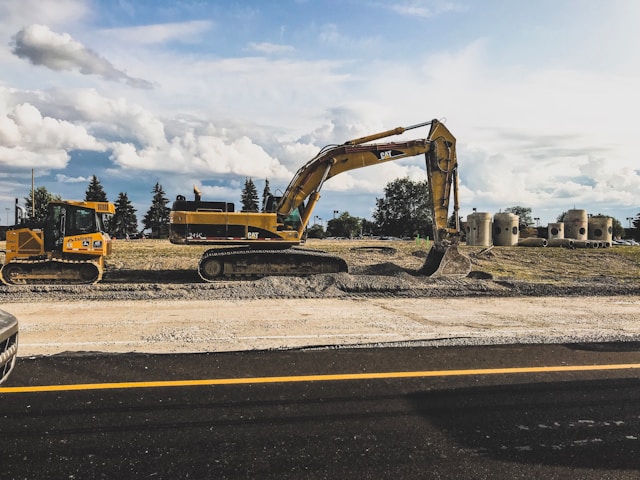
Pumps, crushers, and rollers power modern construction, learn how these machines improve efficiency, precision, and site performance.
In today’s industrial and construction scenarios, work is not just human effort; it is powered by a coordinated orchestra of machines that move, shape, and smoothen surfaces with astonishing millimeter precision. Safeguarding groundwater levels via the de watering pump to refining aggregates and laying down hard-wearing pavements underpin the mechanical infrastructure of these machines.
The following article reveals the inner details of these machines, starting from how the basic principles and applications differ, thereby showing how cognizance of the technical subtleties improves efficiency on site.
Article Breakdown
Submersible Water Pump
Contemporary industrial and construction sites hide in their routine a quiet marvel: the submersible water pump. While it may seem unassuming at first glance, it performs one of the most challenging tasks that maintenance can possibly have: the drawing of water from depths beyond the reach of ordinary suction devices.
The unique feature of this apparatus is that it operates quite literally in the background of everything, underground. It is important to know this device structurally since any malfunctions can lead to serious issues and holdups on your site. The basic constructions can be defined like this: the motor is hermetically sealed to push liquid upwards and thus minimizes air leakage and pressure loss.
Investing in a good apparatus in this regard, one that contains modern stainless-steel impellers, thermoplastic casings, and oil-filled motors-all is a sure-fire way for making absolutely certain that flood control and moisture repellence on your site is underway at all given times. For sites that have complicated and large quantities of hydraulics underway, there are heftier models that deploy vortex impeller designs that operate within screeds and slurries and still prevent the leakage of a single drop.
The comparative edge of this underground monster of an appliance is that it goes way beyond the regular 7-8 meters of other kinds of pumps, extending to well beyond 20 meters. Nor can you ever anticipate a noise complaint while operating this machine, since its quiet, steady hum doesn’t create a nuisance.
Impact Crusher
When we shift from fluid dynamics to solid mechanics, the impact crusher steps into the spotlight. At its heart, this machine turns kinetic energy into the power to fragment. The design of an impact crusher hides a quiet elegance. The rotor’s speed, which is usually within the range of 500 to 1,500 rpm, determines not just the size of the breakage but also the shape of the final product. Tramp curtains and feed controls are adjustable, allowing operators to fine-tune the crusher for fine or coarse outputs. Every detail inside the chamber’s curved contours and the liner material directly steers performance.
One essential comparative advantage of impact crushers as compared to your regular jaw crushers is that they provide a better and more consistent gradation, which directly leads to longer-lasting, smoothing surfaces that withstand wear and tear. Combined with the mighty vertical shaft impactor, it ensures that the aggregate is crushed as finely as needed to coagulate for longevity.
Asphalt Pavers
As water is tamed and aggregates take their form, the road’s final character hinges on one thing: the asphalt paver, the device that turns a hot, syrupy mix into a sleek, tightly knit layer ready for the rolling drum.
A comparative edge emerges: old-school paving leaned on the operator’s instinct and manual leveling. Today’s pavers run with 3D grade and slope control, GPS-guided automation, and ultrasonic sensors that continually gauge thickness and alignment. This minimizes material waste and keeps mat density consistent across long horizons.
Electric screed heat, variable-width extensions, and real-time compaction feedback have hastened the process while reducing energy consumption. Combined with impact-crusher-produced recycled aggregate mixes, today’s pavers feed a circular economy in which performance and sustainability go hand in glove.
Comparative Mechanics: How They Interlink
Three different machines, each performing a unique role along the same spectrum of purpose, are nevertheless focused on one engineering credo: mastery under changing conditions. The submersible water pump stands as the silent guardian, literally coaxing fluids upwards from beneath through hydraulic force combined with a sealed, reliable motor. As its name implies, it thrives underwater, delivering high efficiency and reliability; such a pump becomes indispensable in removing water from foundations, basements, and pits before any build can effectively start.
The impact crusher is the mechanical heartbeat of transformation, using kinetic energy provided to it for the purpose of breaking materials into uniform, cubical aggregates appropriate for high-quality construction mixes.
The asphalt paver brings the process to the surface. With controlled extrusion and deliberate vibration, it lays down paving with precise density and even texture. This precision is so crucial in the finish surfacing of roads, runways, and industrial yards where the need for smoothness, stability, and durability is paramount.
In all, even if you have a small-scale operation that you feel like does not require complicated, digitally equipped machinery like vibratory rollers, you must fork over the pretty pennies and reap the benefits later. These machines have time and again proven that the continuum on the worksite is the way to ensure profitability, and after all, that is your goal.