
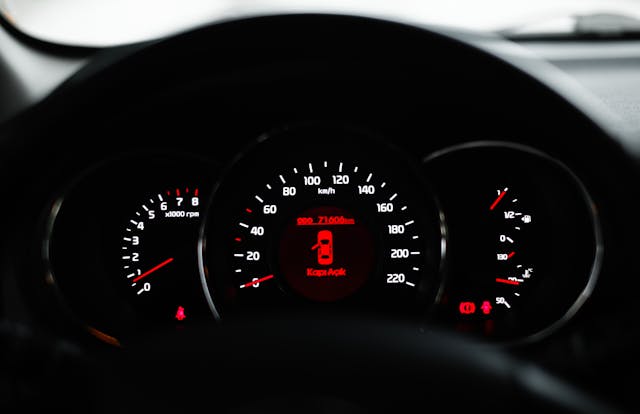
What does TPMS mean in a car? Learn how this tire pressure system keeps you safe, saves fuel, and prevents costly damage.
TPMS means Tire Pressure Monitoring System. It’s a built-in car safety feature that alerts you when tire pressure is too low (or sometimes too high), helping prevent accidents, poor fuel economy, and tire damage.
The first time I noticed the TPMS light, I thought my car was… blinking at me.
A tiny horseshoe-shaped symbol with an exclamation mark glowed on the dashboard. No noise. No drama. Just a quiet, stubborn light.
I ignored it for two days.
Then my steering felt slightly off on a highway curve. Nothing dramatic, just enough to make me wonder if the car had tried to warn me earlier.
That’s when I asked the question most drivers eventually Google:
What does TPMS mean in a car?
What I discovered is that TPMS isn’t just another dashboard symbol. It’s more like a smoke detector for your tires, quiet, unexciting, but extremely important.
And once you understand it, you start seeing your car differently.
Article Breakdown
What Does TPMS Mean in a Car?
TPMS stands for Tire Pressure Monitoring System.
Its job is simple:
It monitors your tire pressure and warns you when it drops below a safe level.
No mystery. No gimmicks.
But simplicity can be deceptive.
A tire underinflated by even 20–25% can:
- Wear out faster
- Reduce fuel efficiency
- Increase braking distance
- Raise the risk of blowouts
A tire is basically a high-pressure balloon carrying thousands of pounds at speed. When pressure isn’t right, physics stops being forgiving.
Quotable fact: “Underinflated tires are a leading contributor to tire-related crashes.”, NHTSA
TPMS isn’t about convenience. It’s about prevention.
Why Cars Started Using TPMS
TPMS didn’t become common because drivers requested it. It became common because of safety regulations.
After major tire-related accidents in the early 2000s, investigators found many crashes were linked to improper tire pressure.
Governments responded.
In the U.S., the TREAD Act made TPMS mandatory in new vehicles from 2007 onward. Many other regions followed with similar rules.
The reality is simple: drivers get busy and forget routine checks. TPMS exists to close that safety gap.
It’s not perfect. But it’s better than guessing.
How TPMS Works
At its core, TPMS uses sensors to measure tire pressure and communicate with your car’s computer.
When pressure falls below a safe threshold, the dashboard warning light turns on.
That’s the system in a nutshell.
But there are two types.
Direct TPMS
Direct TPMS uses physical pressure sensors inside each tire.
These sensors:
- Sit inside the wheel
- Measure actual air pressure
- Send data wirelessly to the vehicle
Think of it as a fitness tracker for your tires.
Pros
- Highly accurate
- Real-time data
- Faster alerts
Cons
- Sensors cost more to replace
- Batteries eventually die
Still, this is the most reliable system.
Indirect TPMS
Indirect TPMS doesn’t measure air directly.
Instead, it uses ABS wheel speed sensors.
Here’s the logic:
A low tire has a smaller diameter. A smaller tire spins faster. The system detects the difference.
It’s clever, but less precise.
Pros
- Lower maintenance cost
- No internal tire sensors
Cons
- Less accurate
- Needs recalibration after service
It works, just not as precisely as direct TPMS.
Understanding the TPMS Warning Light
That small symbol carries important meaning.
Solid Light
One or more tires are underinflated. Check pressure soon.
Flashing Light
Usually signals a system fault. Often related to a bad sensor or communication issue.
Cold Weather Warning
Cold air reduces tire pressure.
Quotable fact: “Tire pressure drops about 1 PSI for every 10°F decrease in temperature.”
Winter mornings often trigger TPMS alerts even without leaks.
Common TPMS Myths
Myth 1: TPMS Means a Flat Tire
Not necessarily. It just means pressure is below the recommended level.
Myth 2: TPMS Replaces Manual Checks
No. It’s a warning system, not a maintenance tool.
Myth 3: You Can Ignore It
You can, but your tires and safety will suffer.
Why Tire Pressure Matters
Your tires are the only part of your car touching the road.
Four contact patches. Each about the size of your hand.
That’s what controls:
- Steering
- Braking
- Stability
- Fuel efficiency
Driving on underinflated tires is like running in worn-out shoes. You can do it, but performance suffers.
Costs add up over time:
- Uneven wear
- Higher fuel use
- Shorter tire lifespan
TPMS simply helps you stay ahead.
What To Do When the TPMS Light Turns On
- Check pressure with a tire gauge
- Inflate to the recommended PSI (driver’s door sticker)
- Drive a few minutes
- Confirm the light turns off
If it stays on:
- Look for punctures
- Check for sensor issues
No panic required. Just action.
TPMS vs Manual Tire Checks
| Feature | TPMS | Manual Check |
|---|---|---|
| Convenience | High | Medium |
| Accuracy | Good | Excellent |
| Preventive | Reactive | Preventive |
| Cost | Built-in | Cheap gauge |
Best strategy? Use both.
Is TPMS Expensive to Maintain?
Sometimes.
Sensor replacement typically costs $50–$100 per tire. Batteries last 5–10 years.
Compared to a blowout or premature tire replacement, that’s minor.
Ignoring tire health is what gets expensive.
Do All Cars Have TPMS?
Most modern vehicles do.
In many countries, it’s required by law for new cars. Older vehicles may not include it, but aftermarket systems exist.
So even if your car didn’t come with TPMS, you can add it.
A Perspective Shift
At first, TPMS felt like a dashboard nuisance.
Now it feels like a quiet layer of intelligence, a system watching something drivers often forget.
It doesn’t make your car cooler. It doesn’t make it faster.
It just keeps you safer in the background.
And maybe that’s the point.
FAQ
What does TPMS mean in a car?
TPMS means Tire Pressure Monitoring System, which alerts drivers to unsafe tire pressure.
Can I drive with the TPMS light on?
Yes, but it’s not recommended. Low pressure affects safety and tire life.
Does TPMS replace checking pressure?
No. Manual checks are still necessary.
Why is my TPMS light on after inflating tires?
It may need resetting or recalibration, or a sensor could be faulty.
How long do TPMS sensors last?
Usually 5–10 years.
Key Takings
- TPMS means Tire Pressure Monitoring System
- It warns when tire pressure is unsafe
- Low pressure affects safety and fuel economy
- Cold weather often triggers alerts
- Direct TPMS is more accurate
- Manual checks still matter
- Ignoring TPMS can become costly