
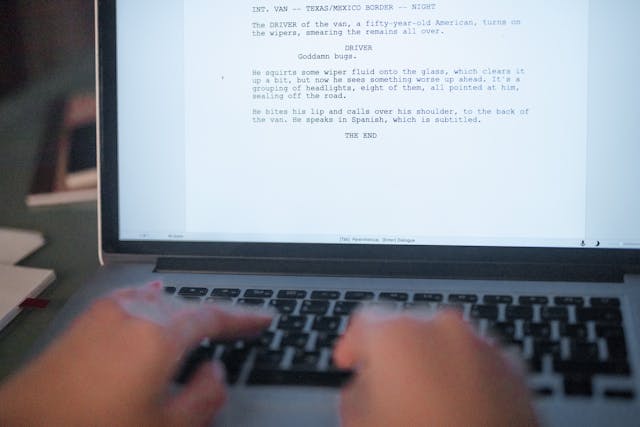
Learn how to start a copywriting business in 2026 with modern tools, real strategies, and a human-first approach that actually works.
How to start a copywriting business in 2026: Learn persuasive writing, pick a profitable niche, build proof fast, use AI as leverage, not a crutch, and sell outcomes, not words. Review types of business models for service-based ventures like copywriting.
At some point in late 2025, I caught myself rewriting the same email headline for the fourth time.
Not because a client asked me to.
Because I wanted it to feel more human.
That’s when it hit me: copywriting in 2026 isn’t about being clever anymore. It’s about being felt.
If you’re reading this, you’re probably standing in that same in-between space.
Not a beginner who knows nothing.
Not an expert with a waitlist.
Just someone thinking: Could I actually change words into a business?
The short answer is yes.
The honest answer is… it’s messier than most guides admit.
This isn’t a “quit your job in 30 days” fantasy.
It’s a real-world, modern breakdown of how to start a copywriting business in 2026, when AI exists, attention spans are fractured, and clients don’t care about your passion, they care about results.
Let’s figure it out together.
Article Breakdown
Building a Copywriting Business in 2026 (Step by Step)
What a Copywriting Business Actually Is in 2026
Before we converse tactics, we need to clear something up.
Copywriting is no longer “writing sales pages.” In 2026, a copywriting business is a revenue support system for brands.
You are not selling words.
You are selling:
- Higher conversions
- Clearer positioning
- Faster decisions
Quotable fact:
“Modern copywriting is measured by outcomes, not elegance.”
This matters because beginners often obsess over tone, style, and creativity, while clients are obsessing over numbers.
And here’s the contradiction most gurus avoid:
Beautiful copy that doesn’t convert is bad copy.
What Copywriters Are Hired For Now
Clients hire copywriters in 2026 for:
- Landing pages that convert cold traffic
- Email sequences that revive dead lists
- Website rewrites that clarify confused brands
- AI-edited copy that sounds human again
Ironically, AI didn’t kill copywriting.
It exposed lazy thinking.
Step 1: Learn Copywriting the 2026 Way (Not the 2016 Way)
Learning copywriting today feels overwhelming because everyone teaches a different “formula.”
Here’s the truth:
Formulas still work, but only if you understand why they work.
What You Actually Need to Learn
You don’t need 27 courses.
You need four core skills:
- Psychology of decision-making
Why people hesitate. Why they scroll. Why they buy. - Clarity over cleverness
Confused prospects don’t convert. Ever. - Structure
Headlines, subheads, CTAs, flow. - Editing
Cutting words is more valuable than adding them.
Quotable fact:
“Clear writing beats creative writing in commercial copy.”
Where to Learn (Without Burning Out)
- Study high-performing landing pages
- Rewrite ads from brands you admire
- Use AI to analyze, not generate blindly
- Practice daily, even if no one sees it
The uncomfortable truth?
Your first copy will be unfavorable.
That’s not failure.
That’s tuition.
Step 2: Choosing a Niche Without Trapping Yourself
This is where most people freeze.
“What niche should I pick?”
“What if I choose erroneous?”
Here’s the reframe:
Your first niche is a starting point, not a prison.
How Niches Work in 2026
Clients don’t want generalists.
But they also don’t want someone who’s scared to adapt.
Good niches in 2026 are based on:
- A specific audience
- A specific problem
- A specific outcome
Examples:
- SaaS onboarding emails
- E-commerce product pages
- Coaches who need authority content
- Local service websites
Quotable fact:
“Specific beats impressive when trust is the goal.”
Pick a niche where:
- Money already moves
- Businesses understand ROI
- You can learn fast
You’re not marrying it.
You’re testing it.
Step 3: Building Proof When You Have No Clients
This part feels unfair.
Clients pursue experience.
You need clients to get experience.
Welcome to the loop.
The 2026 Solution: Proof Without Permission
You don’t wait to be chosen.
You manufacture evidence.
Ways to do this:
- Rewrite existing websites and publish case-style breakdowns
- Create mock projects for real brands
- Improve your own landing page and track metrics
- Offer limited free work with a defined outcome
Not “free copy.”
Free results-focused experiments.
Quotable fact:
“Proof is more persuasive than promises.”
Clients don’t care where the proof came from.
They care that it exists.
Step 4: Pricing Your Copywriting Services (Without Undervaluing)
Pricing is emotional.
Too high feels arrogant.
Too low feels safe.
In 2026, copywriting prices are shifting from:
- Per word ❌
- Per page ❌
To:
- Per project
- Per outcome
- Per business impact
Beginner-Friendly Pricing Framework
Instead of asking:
“How long did this obtain me?”
Ask:
“What is this worth if it works?”
Examples:
- Landing page: $500–$2,000
- Email sequence: $300–$1,500
- Website rewrite: $1,000–$5,000
Start where you can deliver confidently.
Raise prices as results stack.
Contradiction:
Cheap pricing doesn’t attract better clients. It attracts harder ones.
Step 5: Finding Clients in a Noisy 2026 Internet
Cold outreach still works.
Content still works.
Referrals still works.
What doesn’t work?
Sounding prefer everyone else.
Where Copywriting Clients Actually Come From
- Twitter/X thought threads
- LinkedIn clarity posts
- Direct Loom audits sent via email
- Communities where founders hang out
The secret isn’t volume.
It’s relevance.
Convey 10 thoughtful messages instead of 100 templates.
Quotable fact:
“Personal beats polished in early client acquisition.”
Step 6: Using AI Without Losing Your Value
This is the elephant in the room.
Yes, AI can write copy.
No, it cannot replace judgment.
In 2026, the best copywriters use AI to:
- Generate variations
- Analyze tone and clarity
- Speed up drafts
- Edit aggressively
They don’t let it think for them.
Clients aren’t paying you to type.
They’re paying you to decide.
Step 7: Setting Up the Business Side (The Boring but Necessary Part)
You don’t need an LLC on day one.
You do need:
- A simple website
- A portfolio page
- A payment method
- A contract template
Keep it radiance.
Momentum matters more than perfection.
Comparative Section: Copywriting Then vs Now
| Aspect | 2016 Copywriting | 2026 Copywriting |
| Focus | Creativity | Clarity + Results |
| Tools | Google Docs | AI + Analytics |
| Pricing | Per word | Per outcome |
| Demand | Nice-to-have | Revenue-critical |
| Differentiation | Style | Strategy |
FAQ’s
What skills do I need to start a copywriting business in 2026?
You need persuasion, clarity, editing, and basic business communication, not perfect grammar.
Can beginners start a copywriting business in 2026?
Yes. Many clients prefer fresh thinkers who understand modern platforms and AI workflows.
Is copywriting still profitable in 2026?
Yes. Brands still need conversions, positioning, and trust, things AI alone can’t guarantee.
How long does it acquire to get your first client?
With focused outreach, some get clients within 30–60 days. Consistency matters more than speed.
Key Takings
- How to start a copywriting business in 2026 is about outcomes, not words
- AI is a leverage tool, not a replacement
- Proof beats credentials every time
- Niches are starting points, not being sentences
- Pricing should reflect impact, not effort
- Clients buy clarity, confidence, and results
- Momentum matters more than perfection
Additional Resources
- HubSpot Marketing Blog: Practical insights on conversion-focused marketing, buyer psychology, and messaging trends relevant to modern copywriters.
- Harvard Business Review, Persuasion: Research-backed articles on decision-making, persuasion, and business communication that sharpen strategic copywriting skills.